
The grunt work stays with us.
We automate what stalls your operation.
Delivery receipts read over WhatsApp, freight invoices audited, routes visible, and whatever else is holding up your revenue. AI agent, integration, whatever technology the problem calls for. Without replacing the system you already use.
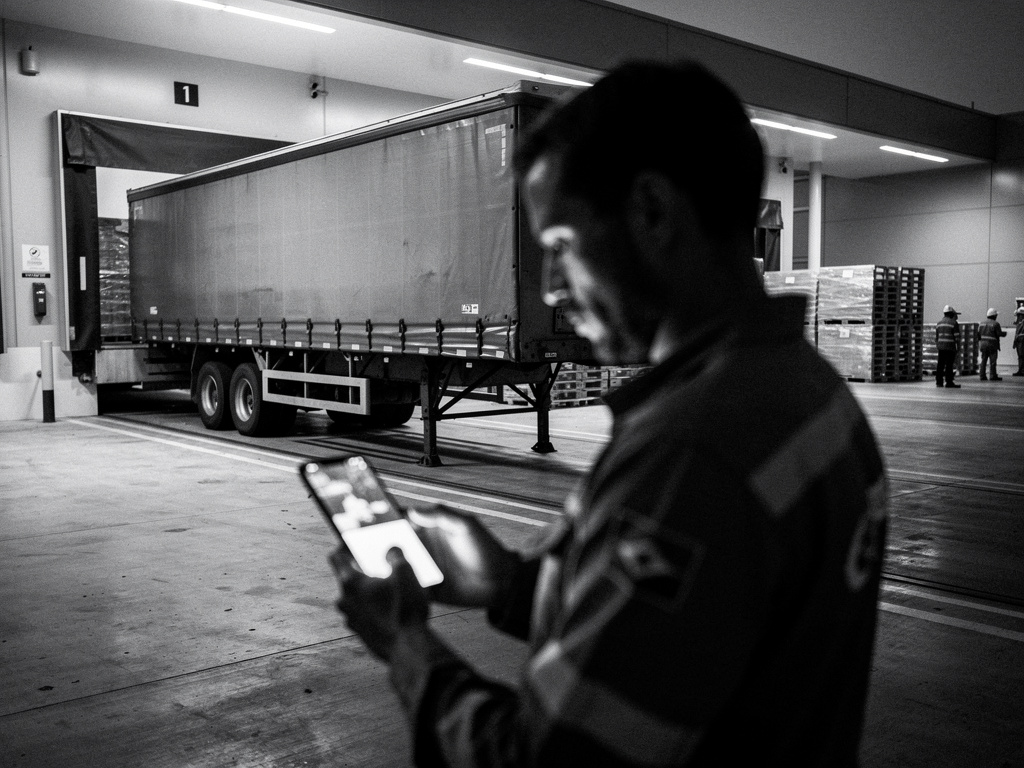
Is your team still checking receipts and invoices by hand?
Manufacturers, distributors, and carriers receive hundreds of delivery receipts a month as WhatsApp photos, PDFs, and paper. Someone opens them one by one, checks the signature, cross-references the invoice, and types it into the system. Same routine on the freight invoice: every CTe checked against the rate table, discrepancies found too late.
And it's not just freight. In any operation, every document that arrives over WhatsApp or on paper and gets retyped into a system is hours of your team tied up and revenue left waiting.
Work that doesn't scale, doesn't get more accurate over time, and keeps your billing on hold.
From paper POD to recognized revenue.
Where we go deep
One product, three fronts of the operation.
Logistics is where we started and where we go deepest. Built for whoever ships the freight and whoever hauls it.
Digital POD via WhatsApp
The driver or carrier sends a photo of the signed receipt over WhatsApp. The reading engine extracts the data even from a bad photo, cross-checks it against the issued invoice, and records the delivery in your system. Discrepancies flagged on the spot, fixed at the source.
Freight invoice audit
Every issued freight e-doc (CTe) is checked against your negotiated rate table: weight, value, taxes, tolls. Discrepancies become a consolidated report for the manager to act on. Disputes and credits stay in your hands, in your own process.
Route visibility
The driver checks in with one tap on WhatsApp and the trip is tracked while it's active. No new app, no installs, no friction.
The model
Diagnosis before license.
We don't sell off-the-shelf agents. We step into your operation, find where manual work is holding up the money, and automate it with whatever works best: an AI agent, a system integration, document reading. If it were just software, you'd get a login.
How it works
-
01
Your invoice (NF) is issued in the ERP and reaches FixLog by integration.
-
02
The signed receipt arrives by WhatsApp, email, or file.
-
03
The engine reads it, cross-checks the data, and validates the delivery.
-
04
Confirmation posted in your system, with the document attached.
✓
From the paper thrown on the truck seat to the financial event in your ERP.
Why now
Most of the operation is still on paper.
of companies in the sector have data reaching managers automatically.
SOURCE: Tendências 2026 Survey, ONPS/Platform Science
AI adoption among carriers.
SOURCE: Rodrigo Gonçalves, CEO GoFlux, BCG panel, Logística do Futuro 2026
of registered carriers in Brazil are independent owner-operators.
SOURCE: ANTT, TRC Yearbook 2025
Whoever digitizes the base now gets ahead.
FixLog Consulting
Operate. Digitize. Grow.
Before automating, we operate. Senior consulting in logistics, operations, and technology, run by the founders themselves: diagnosis, process redesign, implementation. The product grows out of what the consulting work sees on the factory floor. The same method works for other operations: if your team spends the day checking, retyping, and chasing discrepancies, the conversation is worth having.
Frequently asked questions.
- Is FixLog just for carriers?
- No. The product serves whoever ships the freight and whoever hauls it: manufacturers, distributors, carriers, logistics operators. And outside logistics, consulting brings the same method to any operation weighed down by manual work.
- Do I need to switch systems or install an app?
- No. We integrate with the ERP you already use, and the driver interacts over the WhatsApp already in their pocket.
- Do you sell software, AI agents, or consulting?
- Whatever the problem calls for. Consulting diagnoses and implements; the product keeps it running day to day.
- How does it start?
- With a diagnostic conversation. You show us where the operation stalls, and we tell you what can be automated and what isn't worth it.